Your Amazon Echo Show Has Become a Billboard (And There's Nothing You Can Do About It)
Remember when you bought your Amazon Echo Show? Maybe you were excited about having a smart display in your kitchen to follow recipes, check the weather, or display family photos. You probably didn't sign up to have ads for elderberry supplements and protein chips interrupting your morning routine. Well, welcome to 2025, where your smart home device has apparently decided its true calling is to sell you stuff.
The Ad Invasion Is Real
Echo Show owners across the internet are raising the alarm: their smart displays have transformed into aggressive advertising platforms seemingly overnight. And we're not talking about subtle banner ads tucked away in a corner. These are full-screen, in-your-face promotions that pop up between your personal photos, interrupt your alarm clock display, and sometimes even blast audio at full volume.
One frustrated Redditor summed it up perfectly: "This is getting ridiculous and I'm about to just toss the whole thing and move back to Google."
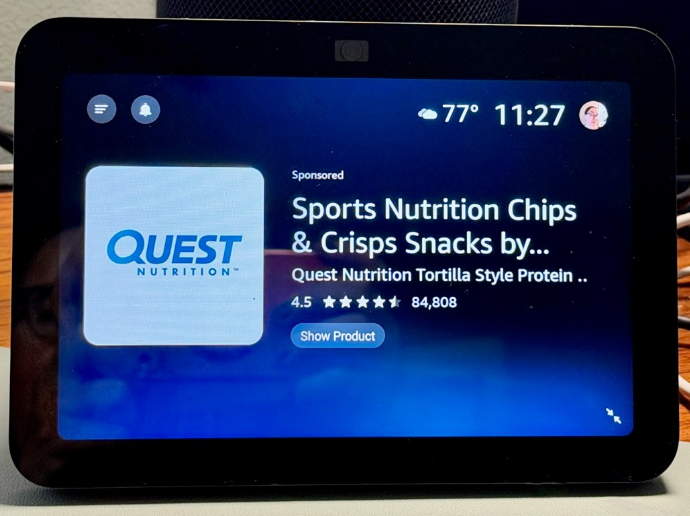
Jennifer Pattison Tuohy from The Verge, who owns multiple Echo Shows, reported seeing ads appear for the first time this week on one of her devices. Picture this: you're trying to enjoy a slideshow of your vacation photos, and suddenly there's a "sponsored" ad for herbal supplements staring back at you. Not exactly the ambient home experience Amazon promised.
It Gets Worse
The ads aren't just random product placements either. Amazon has started aggressively pushing Alexa+, their new AI-powered subscription service that's still in early access. Users report being bombarded with full-screen takeovers urging them to subscribe – some even playing audio automatically.
Here's the kicker: there's no way to turn these ads off.
Unlike Amazon's Kindle, where you can pay extra for an ad-free version, Echo Show buyers have no such option. You paid full price for the device, but Amazon apparently sees your home screen as premium real estate they can rent out to the highest bidder.
Amazon's Corporate Double-Speak
When Ars Technica reached out to Amazon for comment, the company's response was... well, exactly what you'd expect from a corporation trying to spin bad news:
"Advertising is a small part of the experience, and it helps customers discover new content and products they may be interested in."
A "small part of the experience"? Tell that to the users who can't even use photo frame mode without seeing ads for tabletop picture frames. The irony is almost poetic.
Amazon also declined to confirm whether they've actually increased the ad load. But here's the thing: when thousands of users are suddenly complaining about something they weren't complaining about before, it doesn't take a data scientist to connect the dots.
Why Is This Happening?
Here's the uncomfortable truth: Amazon's Devices division is hemorrhaging money. We're talking about losses exceeding $25 billion between 2020 and 2024. That's billion with a B.
The Echo, Fire tablets, Kindle – these aren't profitable products for Amazon. They never really were. The original strategy was to sell you the hardware cheaply and make money when you used it to buy things from Amazon. That clearly isn't working out as planned.
So now? They're turning your devices into billboards.
Panos Panay, head of Amazon's Devices & Services business, actually tried to reframe this at a recent event: "If it's relevant, it's not an ad – it's an add-on."
Let me translate that from corporate-speak: "We're going to show you ads, but we'll call them something else and hope you don't notice."
The Proximity Problem
Amazon's ad system is creepily sophisticated. According to the company, the Echo Show adjusts its advertising based on how close you are to the device:
More than four feet away: Full-screen ads rotate with weather, recipes, and news
Within four feet: Ads appear as the first card on your home screen
So your Echo Show is literally watching you, calculating your distance, and serving you ads accordingly. If that doesn't feel like a Black Mirror episode, I don't know what does.
Real People, Real Frustration
The Reddit threads tell the real story. Users who spent 100−300 on these devices are feeling betrayed:
"I'm about to just toss the whole thing..."
"These Alexa+ ads are invasive and disruptive."
"My smart display feels more like a billboard for Amazon these days."
Some users report successfully getting refunds after complaining to customer service. Others are simply unplugging their devices and moving them to closets. A few are switching to Google's smart displays, despite those having their own issues.
The most frustrating part? Many of these users were Amazon loyalists. They bought into the Echo ecosystem with multiple devices throughout their homes. Now they're watching that investment turn into a constant sales pitch.
The Workarounds (For Now)
If you're stuck with an Echo Show and can't return it, Reddit users have discovered a couple of workarounds:
Option 1: Create a Photo Frame Routine
- Open the Alexa app
- Tap "More" (three stacked lines at the bottom)
- Select "Routines" and tap the plus icon
- Choose "Add an event" for your trigger
- Select "Add action," then "Custom"
- Type: "Alexa, start Photo Frame"
Option 2: Change Your Language
Switching your device language to English/Canada apparently reduces or eliminates the ads. Here's how:
- Swipe down from the top of your Echo Show
- Select Settings
- Scroll to Device Options
- Tap Device Language
- Choose English/Canada
These aren't perfect solutions, and Amazon could close these loopholes at any time. But for now, they're your best bet.
The Bigger Picture
This situation raises some uncomfortable questions about the future of smart home devices. When you buy a product outright, should the manufacturer have the right to turn it into an advertising platform after the fact?
Amazon didn't sell the Echo Show as an "ad-supported" device. There was no discount offered in exchange for viewing advertisements. Yet here we are, with ads appearing on devices people paid full price for, with no option to opt out.
It's worth noting that this isn't just an Amazon problem. Samsung recently faced backlash for testing ads on their smart refrigerators. As companies struggle to monetize Internet of Things devices, advertising is becoming the default solution.
But here's the thing: your refrigerator shouldn't show you ads. Your bathroom mirror shouldn't show you ads. And your digital photo frame definitely shouldn't interrupt grandma's birthday pictures with sponsored content for protein chips.
What Happens Next?
Amazon says it will "continue to evolve our advertising experiences based on customer feedback." Translation: "We'll keep pushing until the backlash gets loud enough to affect sales."
The real test will be whether customers vote with their wallets. If Echo Show sales tank because of this, Amazon might reconsider. If they don't? Expect the ads to get worse.
Panos Panay acknowledged "the randomness" of some ads needs work, which is corporate-speak for "yeah, we know this is annoying, but we're doing it anyway."
My Take
Look, I get it. Amazon is a business, and businesses need to make money. The Devices division is clearly struggling, and something had to give.
But there's a right way and a wrong way to handle this.
The right way would be offering customers a choice: buy an ad-supported Echo Show at a discount, or pay full price for an ad-free version. You know, like they already do with Kindles.
The wrong way is retrofitting ads onto devices people already bought, giving them no option to disable the ads, and then gaslighting them by calling it "discovery experiences" and "a small part of the experience."
When users are literally saying they'd rather throw their devices in the trash than deal with the ads, that's not a "small part of the experience." That's a fundamental breakdown of the relationship between a company and its customers.
Should You Still Buy an Echo Show?
If you're considering buying an Echo Show today, go in with your eyes open. You're not just buying a smart display – you're buying a device that will show you ads, possibly at full volume, with no way to turn them off.
For current owners? Try the workarounds, contact customer service for a potential refund, or consider switching to a different ecosystem. Google's Nest Hub has its own issues, but at least for now, the ad situation isn't as aggressive.
The Bottom Line
Amazon has turned the Echo Show into a cautionary tale about the smart home future nobody wanted. These devices were supposed to make our lives easier and more connected. Instead, they've become yet another screen competing for our attention and trying to sell us things.
You know what's ironic? Amazon could probably make more money by offering a premium, ad-free Echo Show for an extra 50−100. Plenty of users would gladly pay it. Instead, they've chosen to alienate their customer base and damage trust in the Echo brand.
As one Reddit user perfectly put it: "I paid good money for this thing. The least Amazon could do is let me use it without being advertised to in my own home."