NVIDIA Just Started Selling an AI Supercomputer That Fits on Your Desk for $3,999
Remember when "supercomputer" meant a room-sized machine with blinking lights and enough cooling fans to power a wind farm? Yeah, NVIDIA just laughed at that notion and crammed one into a box that weighs less than three pounds. Meet the DGX Spark: a desktop AI supercomputer that's now available for $3,999. And before you roll your eyes at the price tag, consider this—it packs the kind of computing power that, not long ago, required access to expensive data centers and would've cost you tens of thousands of dollars.
What Exactly Is This Thing?
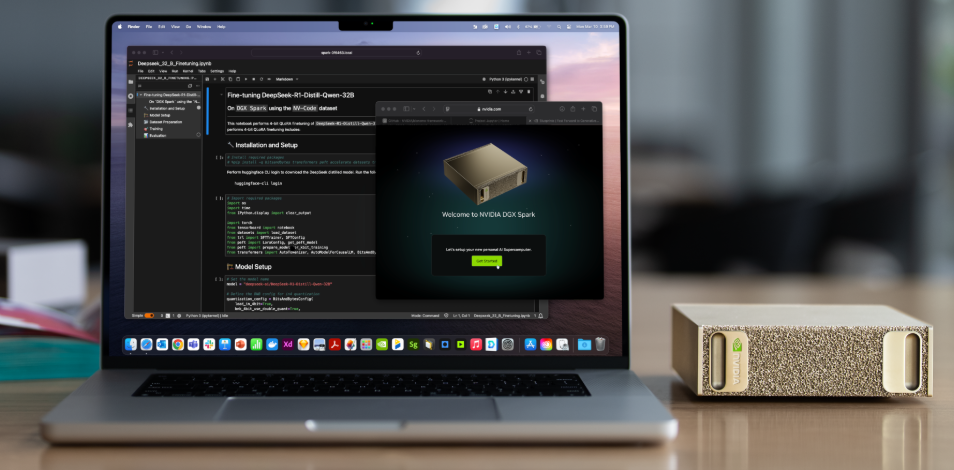
The DGX Spark is NVIDIA's answer to a very specific problem: AI developers are running into the limits of regular computers. Your standard PC or even a beefy workstation just doesn't have the memory or processing muscle to handle the massive AI models that researchers and developers need to work with today.
Sure, they could rent cloud computing time or shift their work to data centers, but that gets expensive fast and means you're constantly dependent on internet connectivity. The Spark puts that power right on your desk in a compact 5.9 x 5.9 x 1.99-inch gold box that you could probably fit in a large backpack.
NVIDIA calls it "the world's smallest AI supercomputer," and honestly? They might not be exaggerating.
The Specs Actually Matter Here
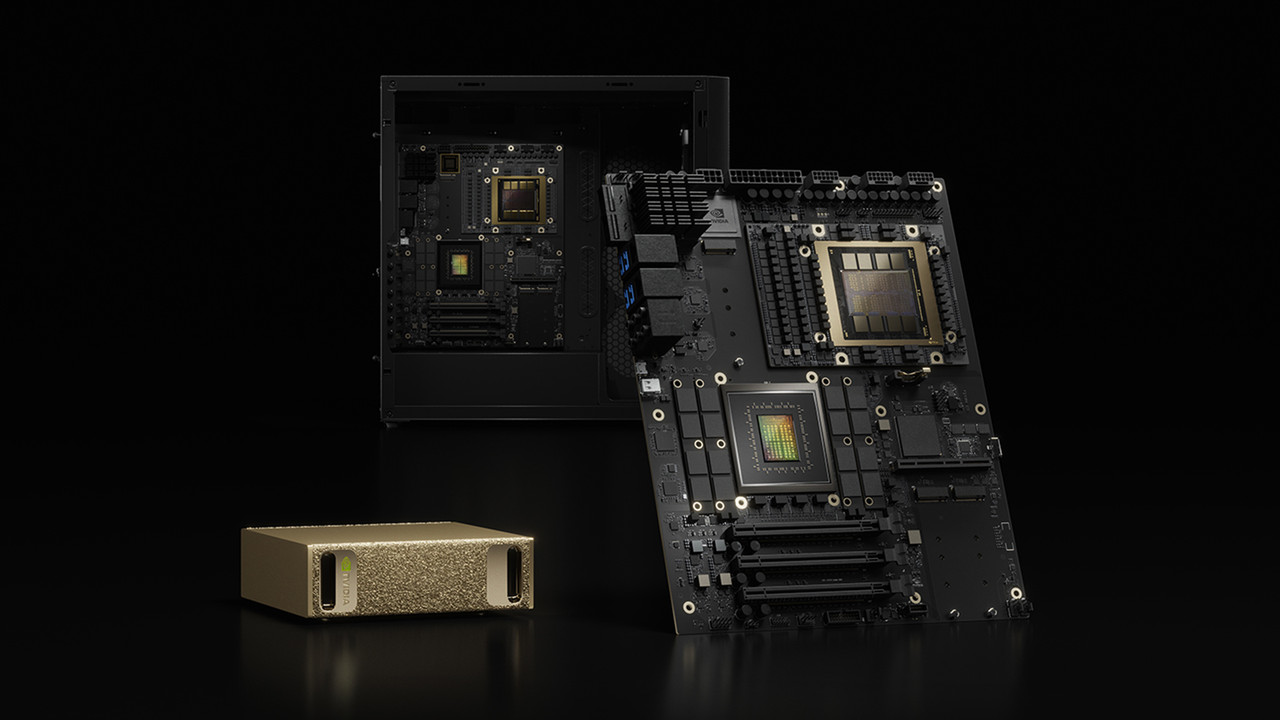
Usually, tech specs are boring. But in this case, they tell an interesting story about what's possible.
The DGX Spark delivers one petaflop of AI performance. For context, that's one quadrillion calculations per second. From something that weighs 2.65 pounds and plugs into a standard wall outlet.
Inside, you'll find:
- NVIDIA's GB10 Grace Blackwell Superchip (combining a 20-core ARM CPU with a Blackwell GPU)
- 128GB of unified memory shared between CPU and GPU (this is the secret sauce)
- Up to 4TB of NVMe SSD storage
- ConnectX-7 200Gb/s networking
- Four USB-C ports, Wi-Fi 7, and HDMI
- NVIDIA's DGX OS (a customized Ubuntu Linux loaded with AI software)
But here's why that 128GB of unified memory is a game-changer: most consumer GPUs top out at 12-24GB of video RAM. That's fine for gaming or basic AI tasks, but if you want to run larger AI models locally—say, something with 120 billion parameters—you're out of luck.
The Spark can handle AI models with up to 200 billion parameters for inference and fine-tune models up to 70 billion parameters right on your desk. No cloud required.
Who Actually Needs This?
Let's be honest: you're probably not buying a DGX Spark to browse Reddit or play video games (though it technically could). This is purpose-built hardware for specific users:
AI Researchers and Data Scientists: If your day job involves training models, running experiments, or testing AI algorithms, the Spark lets you do that work locally without waiting for cloud resources or dealing with data center access.
Developers Building AI Applications: Whether you're customizing image generation models like FLUX.1, building AI chatbots with Qwen3, or creating vision search agents using NVIDIA's Cosmos Reason model, the Spark gives you a local development environment powerful enough to actually get work done.
Universities and Research Labs: At $4K, it's expensive for an individual but incredibly affordable for institutions that would otherwise need to invest in far more expensive infrastructure. NYU's Global AI Frontier Lab is already using them.
Privacy-Sensitive Projects: If you're working on healthcare AI, financial models, or anything where sending data to the cloud is a no-go, having local processing power with this much memory is invaluable.
Companies Experimenting with AI: Early recipients include heavy hitters like Google, Meta, Microsoft, Hugging Face, and Anaconda—organizations testing and optimizing their tools for the Spark platform.
The Elon Musk Connection

Here's a fun bit of tech history: NVIDIA CEO Jensen Huang personally hand-delivered one of the first DGX Spark units to Elon Musk at SpaceX's Starbase facility in Texas.
Why does that matter? Because it's a callback to 2016, when Huang delivered the very first DGX-1 supercomputer to Musk at a "small startup called OpenAI." That machine helped train the models that eventually became ChatGPT and kicked off the AI revolution we're living through now.
"DGX-1 launched the era of AI supercomputers and unlocked the scaling laws that drive modern AI," Huang said. "With DGX Spark, we return to that mission—placing an AI computer in the hands of every developer to ignite the next wave of breakthroughs."
It's a nice bit of storytelling, but it also highlights NVIDIA's strategy: get powerful AI tools into the hands of developers and see what they build.
How Does It Compare to Consumer GPUs?
If you're thinking, "Can't I just buy a high-end gaming GPU and do the same thing?"—well, sort of, but not really.
The GPU compute performance in the GB10 chip is roughly equivalent to an RTX 5070. That's solid, but not top-tier. An RTX 5090 would smoke it in raw speed.
But here's the catch: The 5070 has just 12GB of video memory. The 5090 has 24GB. To run really large AI models, you need way more than that. Some models require 80GB or more just to load into memory.
The DGX Spark's 128GB of unified memory means you can run models that simply won't fit on consumer hardware—even if they run slower than they would on a $25,000 H100 server GPU.
For comparison:
- RTX 5070:~$600, 12GB memory, great for gaming and small AI tasks
- RTX Pro 6000: ~$9,000, more memory, professional workstation GPU
- H100 server GPU: ~$25,000+, data center-level power
- DGX Spark: $3,999, 128GB unified memory, fits on your desk
It's not the fastest option. But it's the most accessible way to get serious AI horsepower without needing a server rack.
It's Not Just NVIDIA—Partners Are Joining In
NVIDIA isn't the only one making these machines. The company designed the platform, but major PC manufacturers are launching their own versions:
- Acer (Veriton GN100)
- ASUS
- Dell Technologies
- GIGABYTE
- HP
- Lenovo
- MSI
They all use the same GB10 chip, so performance should be similar across models. Expect slight variations in design, cooling, ports, and bundled software.
You can order directly from nvidia.com starting October 15, or grab one from partners and select retailers like Micro Center in the US.
What Can You Actually Do With It?
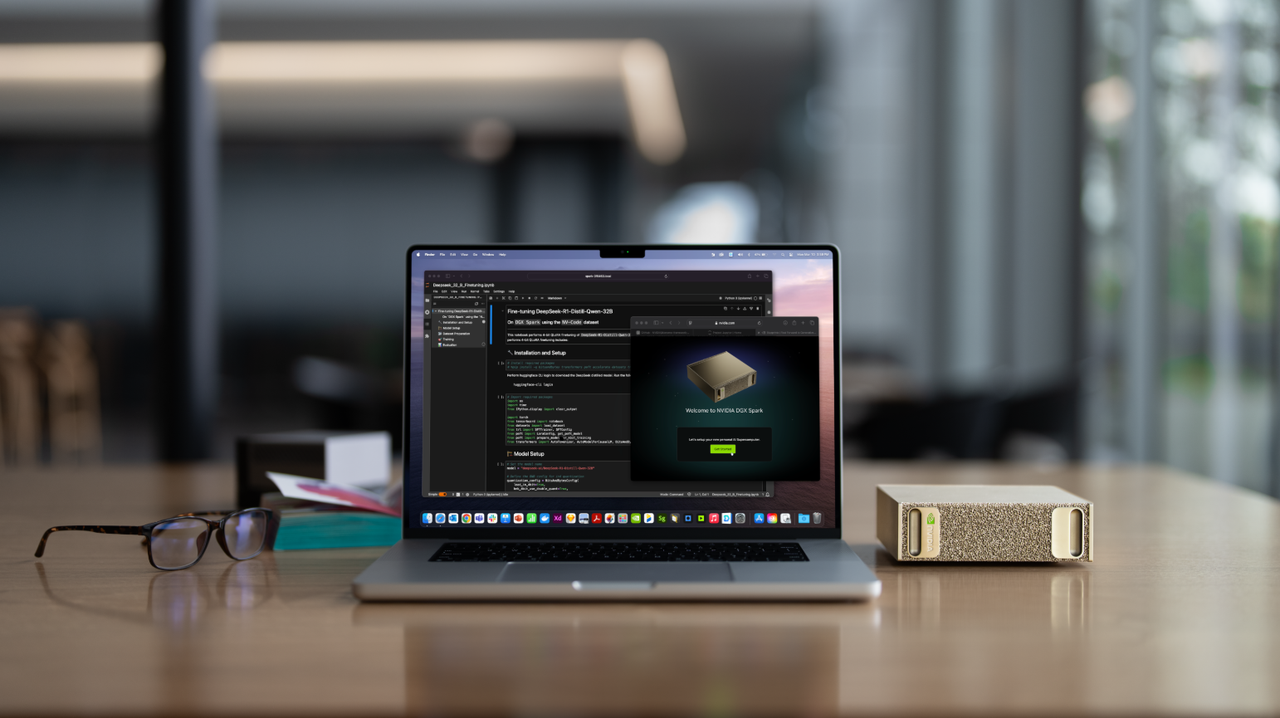
NVIDIA isn't just selling hardware—it's selling a complete AI development platform. The DGX Spark comes with the full NVIDIA AI software stack preinstalled, including:
- CUDA libraries for GPU-accelerated computing
- NVIDIA NIM microservices for deploying AI models
- Access to pre-trained models from NVIDIA's AI ecosystem
- Developer tools for building, testing, and deploying AI applications
Out of the box, you can:
- Customize and run advanced image generation models
- Build AI chatbots optimized for local execution
- Create vision-based AI agents for search and summarization
- Fine-tune large language models without cloud dependencies
- Run privacy-sensitive AI workloads entirely offline
And because it runs on DGX OS (Ubuntu-based), you've got access to the entire Linux ecosystem of development tools.
Is $4,000 Actually a Good Deal?
For the average person? Absolutely not. This isn't a consumer device.
But for AI developers and researchers who are currently paying for cloud compute time or dealing with the limitations of standard hardware? It could pay for itself pretty quickly.
- Cloud AI compute: Can easily run hundreds to thousands per month for serious workloads
- Data center access: Often requires institutional backing and shared resources
- High-end workstation GPUs: $9K+ and still limited by memory constraints
At $3,999, the Spark sits in an interesting middle ground. It's expensive enough to be a serious investment, but cheap enough that individual developers, small teams, and research labs can actually afford it without breaking the bank.
Plus, you own it. No monthly fees, no usage limits, no waiting in queue for cloud resources.
The Bigger Picture: Democratizing AI Development
What NVIDIA is really betting on here is that putting powerful AI tools directly in developers' hands will accelerate innovation in ways that cloud-based development can't match.
When you have immediate, always-available access to serious computing power, you experiment more. You try weird ideas. You iterate faster. You don't have to justify every model training run to a budget committee or wait for cloud resources to free up.
"This new way to conduct AI research and development enables us to rapidly prototype and experiment with advanced AI algorithms and models," said Kyunghyun Cho, a professor at NYU's Global AI Frontier Lab.
NVIDIA is also working on a bigger sibling called **DGX Station**, featuring a GB300 Grace Blackwell Ultra chip with 20 petaflops of performance and 784GB of unified memory. No price or release date yet, but expect it to cost significantly more.
Should You Get One?
Unless you're actively developing AI applications, running research projects, or building AI-powered products, probably not. This is specialized hardware for specialized use cases.
You should consider the DGX Spark if:
- You're an AI researcher tired of cloud computing limitations
- You're building AI products and need local development infrastructure
- You work on privacy-sensitive AI projects that can't use cloud services
- You're a data scientist who regularly works with large models
- You're part of a university or research institution exploring AI
- You just really, really love having cutting-edge AI hardware (hey, no judgment)
Skip it if:
- You're primarily gaming or doing standard productivity work
- You occasionally dabble in AI but don't need to run massive models
- You're fine with cloud-based AI development tools
- You don't have workflows that specifically benefit from 128GB of unified memory
The Bottom Line
The NVIDIA DGX Spark represents something genuinely new: a category of computer designed specifically for the AI age. It's not a gaming PC. It's not a workstation. It's not a server. It's a purpose-built AI development platform that happens to fit on your desk.
At $3,999, it's expensive by consumer standards but potentially transformative for developers who've been constrained by hardware limitations or cloud costs. And if NVIDIA's 2016 bet on OpenAI is any indication, putting this kind of power into developers' hands might just spark the next major AI breakthrough.
The DGX Spark goes on sale October 15 at nvidia.com and through partners. If you're building the future of AI and need serious computing power without the data center overhead, this might be exactly what you've been waiting for.
And if nothing else, it's a reminder that "supercomputer" doesn't have to mean "room-sized" anymore. Sometimes the most powerful machines come in the smallest packages.